What is BrightEdge?

SEO and AEO are converging. BrightEdge brings traditional search performance and AI search visibility together, helping marketers understand where their brands appear, how competitors are performing, and what they can do to improve discoverability.
What is BrightEdge?
BrightEdge is an enterprise search intelligence and optimisation platform designed to help organisations improve their visibility across traditional search engines and AI-powered discovery platforms, including Google, ChatGPT and Perplexity.
Historically, search engine optimisation (SEO) has focused on improving website rankings, organic traffic and conversions. However, the emergence of AI-generated answers introduces another dimension: answer engine optimisation (AEO), which considers whether brands are mentioned, cited or recommended within AI-generated responses.
BrightEdge brings these disciplines together, providing marketers with research, competitive intelligence, content recommendations and reporting through a connected platform.
How does BrightEdge work?
BrightEdge combines several capabilities that address different aspects of search performance.
- Traditional SEO and competitive intelligence: Data Cube X supports keyword research and historical analysis, while Share of Voice reporting helps marketers understand their visibility relative to competitors. Teams can investigate which keywords and pages are contributing to changes in search performance, including differences when Google AI Overviews appear.
- AI search visibility: AI Catalyst monitors brand mentions, citations and competitive performance across AI search platforms. This provides insight into whether AI systems are including a brand in their responses and which competitors are gaining visibility.
- AI market intelligence: AI Hyper Cube extends this analysis beyond individually tracked prompts to explore broader AI conversations, emerging demand and opportunities where competitors are appearing but a brand is absent.
- Content optimisation: Content Advisor, Copilot and Autopilot help translate search intelligence into recommendations and, where appropriate, automated website optimisation.
Together, these capabilities allow marketers to move beyond monitoring rankings towards understanding how their brands are represented throughout the search and discovery process.
What does this mean for B2B marketers?
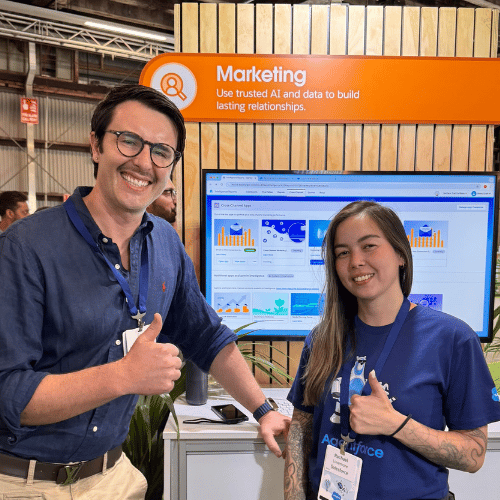
At a BrightEdge session on 18 November 2026, discussions with enterprise marketers highlighted an important challenge: organisations are collecting increasingly sophisticated search data, but connecting that information to commercial outcomes remains difficult.
For B2B organisations, this challenge is particularly significant. Buyers often investigate problems, compare solutions and form preferences long before contacting a supplier. Increasingly, some of that research takes place within AI interfaces where marketers have limited visibility into individual buyer behaviour.
While BrightEdge can estimate AI prompt demand and measure brand presence, those estimates do not provide a complete picture of the individual customer's research journey.
During the discussion, I argued that the next opportunity for B2B marketers is to move from reactive reporting towards proactive intelligence. Rather than simply reporting which keywords or prompts performed well last month, organisations need to connect search visibility with buyer intent signals, CRM information, sales activity and ultimately revenue.
This requires a broader view of attribution and influence, recognising that not every meaningful interaction will be directly observable or attributable.
From search visibility to commercial value
BrightEdge represents an important development in how organisations understand search. However, greater visibility into AI-generated answers should not be confused with greater influence over purchasing decisions.
A brand appearing in ChatGPT does not automatically translate into a qualified sales opportunity, just as a first-page Google ranking does not guarantee revenue.
For B2B marketers, the strategic opportunity lies in connecting three questions: Are we being discovered? Are we influencing buyer consideration? And is that influence contributing to commercial outcomes?
At Human Digital, we help B2B organisations connect their marketing strategy, technology and performance measurement to address these questions. Through our Strategy, Systems and Growth capabilities, we focus on turning fragmented marketing intelligence into more informed decisions across the buyer journey.
As search continues to evolve, the competitive advantage will not simply belong to organisations with the most sophisticated technology, but to those capable of interpreting the evidence and acting on it.
Want to understand how SEO and AI search fit into your B2B growth strategy? Talk to Human Digital.
Frequently asked questions about BrightEdge
What is BrightEdge used for?
BrightEdge is an enterprise platform used for search engine optimisation (SEO), answer engine optimisation (AEO), competitive analysis and content performance measurement. It helps organisations understand how their websites and brands perform across traditional search engines and AI-powered discovery platforms.
What is the difference between SEO and AEO?
SEO focuses on improving website visibility in traditional search engine results, while AEO focuses on helping brands and content appear in AI-generated answers. Both disciplines rely on relevant, authoritative and accessible content, but they differ in how visibility and performance are measured.
Can BrightEdge track brand visibility in ChatGPT?
Yes. BrightEdge offers AI search intelligence capabilities, including AI Catalyst and AI Hyper Cube, that help marketers monitor brand mentions, citations and competitive visibility across ChatGPT and other supported AI platforms. However, these insights do not provide complete visibility into individual users' conversations or buying journeys.
How does BrightEdge compare with Google Search Console?
Google Search Console provides first-party information about how a website performs in Google Search, including impressions, clicks and indexing. BrightEdge extends beyond this by offering competitive intelligence, keyword research, content optimisation and AI search visibility across multiple platforms. The two tools serve complementary purposes.
Is BrightEdge suitable for B2B marketing?
Yes. BrightEdge is particularly relevant to B2B organisations with complex product portfolios, multiple markets and lengthy buying journeys. It can help teams identify search opportunities, understand competitor visibility and improve how technical expertise and solutions are represented across search and AI-generated answers.
Can BrightEdge measure the revenue impact of AI search?
BrightEdge can help organisations understand AI search visibility and identify opportunities for optimisation, but visibility alone does not establish revenue impact. Measuring commercial contribution requires connecting search intelligence with website analytics, CRM data, sales activity and attribution models. This remains an important challenge for B2B marketers.
Let's build something good together
If you have a project in mind, we would be happy to have a chat about how we can make it happen.


Recent insights