
Energy, AI and New Zealand’s Next Economic Opportunity
.png)
Energy emerged as a key theme at the 2026 IoD Leadership Conference, particularly in the discussions on artificial intelligence, geopolitics and economic growth.
Chris Bradley from the McKinsey Global Institute made the observation that the constraint on the continued development of AI may ultimately not be computing power or semiconductor availability, but electricity. The scale of investment currently taking place in AI infrastructure is creating a corresponding increase in electricity demand. Bradley used the comparison that a gigawatt-scale data centre has an electricity requirement roughly equivalent to one million homes. The United States is already developing multiple facilities at this scale.
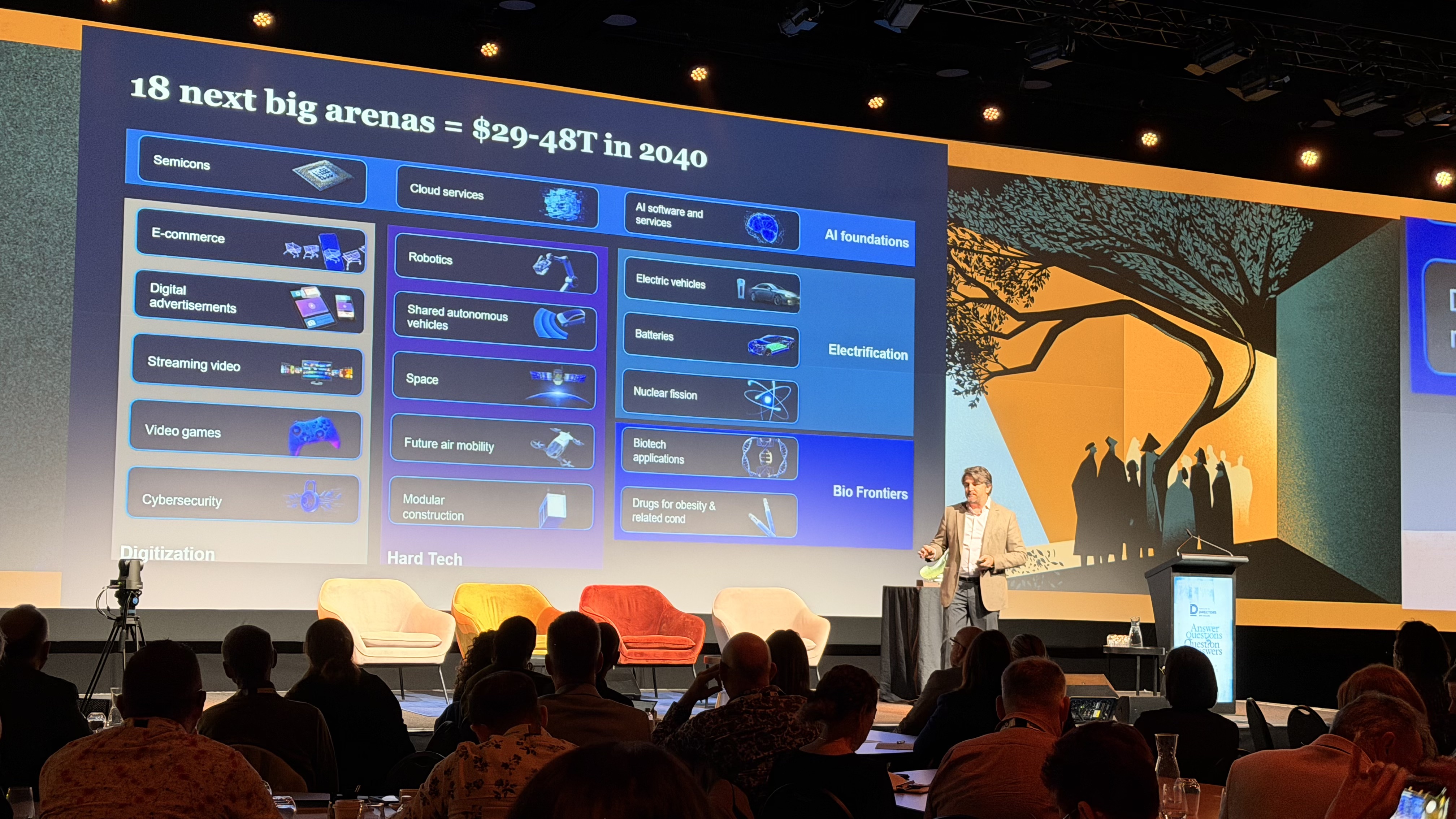
This matters because the development of AI is increasingly becoming an infrastructure question. The large technology companies are engaged in a significant capital expenditure race to increase computing capacity, but additional computing capacity requires additional electricity generation, transmission infrastructure and grid capacity. Bradley’s argument was that electricity could become one of the principal constraints on the next stage of AI development.
This challenge extends beyond AI with developed economies simultaneously attempting to electrify transport and industry, replace ageing generation assets and reduce carbon emissions. They are also doing so in an environment where infrastructure development is slow, capital intensive and subject to increasingly complex regulatory and political considerations. Demand for electricity is therefore increasing at precisely the point when expanding supply has become more difficult.
For New Zealand, however, this changing relationship between energy and economic development presents an interesting opportunity.
New Zealand already generates a substantial proportion of its electricity from renewable sources and has further renewable generation potential. Historically, this has primarily been discussed as an environmental advantage. It may increasingly become an economic and strategic advantage.
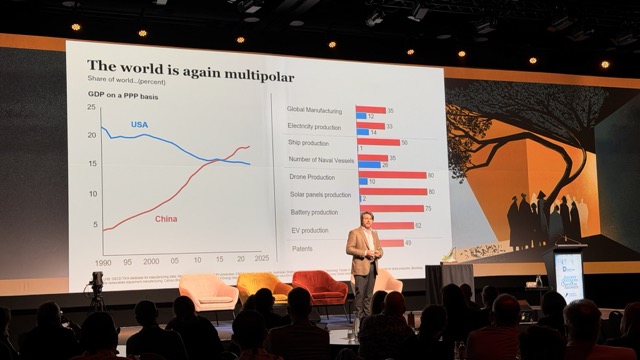
Charles Edel’s discussion of geopolitics reinforced this point from a different perspective. Competition between the United States and China is increasingly extending beyond traditional measures of economic and military power into technology, infrastructure and industrial capability. If AI becomes an important component of national economic and strategic capability, access to the energy required to support that technology also becomes strategically important.
The implication for New Zealand is that energy policy should perhaps be considered more explicitly alongside economic development, technology and industrial policy.
New Zealand has experienced persistently weak productivity growth and relatively low levels of capital investment compared with many advanced economies. Attracting industries that bring capital, infrastructure and higher-value economic activity is therefore important. An electricity system capable of providing reliable, increasingly renewable and competitively priced energy could form part of that proposition.
This does not mean that New Zealand should simply become a destination for data centres. The more important question is whether the country can use its energy resources to support a broader ecosystem of technology, advanced industry and productive investment.
The strategic challenge is that New Zealand must expand electricity generation and transmission sufficiently to meet increasing domestic demand, while also considering whether energy can become a source of comparative advantage in attracting the industries that will contribute to future economic growth.
For much of the past decade, the energy debate has been dominated by the transition to lower emissions. That remains important. What may be changing is the economic value attached to the electricity system itself.
In an increasingly energy-intensive global economy, the ability to generate and distribute electricity reliably may become one of the more important determinants of national competitiveness. For New Zealand, that creates both an infrastructure challenge and a potentially significant economic opportunity.
Recent insights
.png)


.png)
.png)